Butter, Wurst, and Spiral-Bound Heaven: The Recipe Books That Hold Comal County's Real History
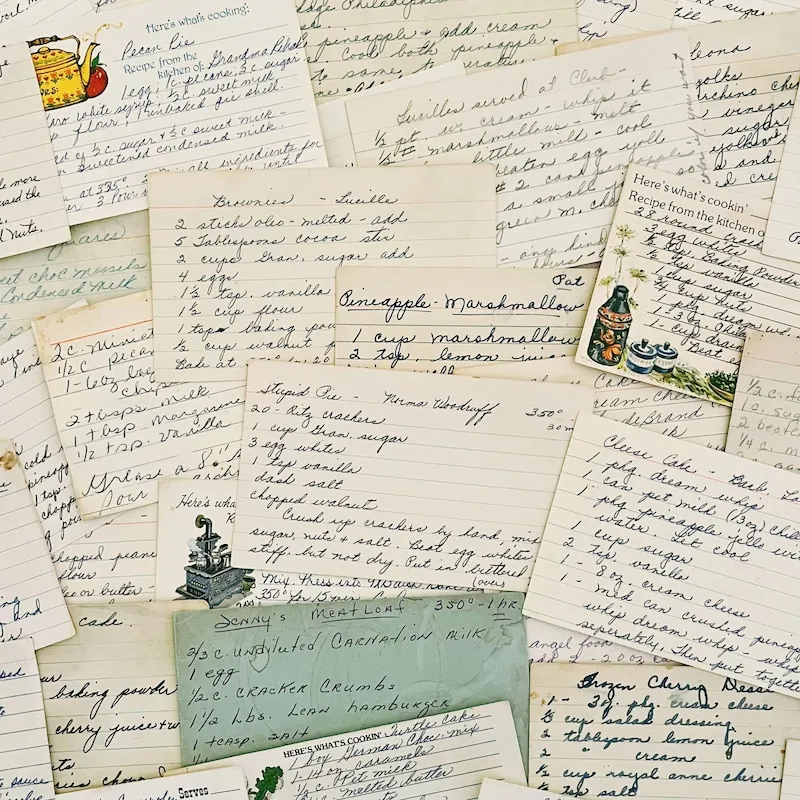
Photo: vintage community cookbook and handwritten recipe cards on kitchen table, via i.etsystatic.com
Ask around Comal County long enough and somebody's kitchen cabinet will produce one: a plastic-comb-bound cookbook from a church anniversary, a VFW auxiliary fundraiser collection from 1987, an index card in your great-aunt's handwriting that just says "kuchen — see Mama's notes."
These things look like clutter. They're actually the county's most important food archive.
Where the Recipes Actually Live
Formal restaurants follow trends. Community cookbooks don't bother. Flip through one of the vintage collections from New Braunfels churches or the volunteer fire department auxiliaries and you'll find the real record of how this county eats: sausage seasoning ratios measured "by feel," kolache fillings that assume you already know the dough, and cobbler instructions that specify the peaches by the person who picked them.
The German-Texan backbone shows everywhere. Smokehouses and sausage-making get whole sections. There are recipes for sauerkraut that call for a crock and six weeks of patience. Desserts run heavy on the butter, the streusel, and the assumption that you'll be feeding a church basement's worth of people, not four.
What makes these books special is what they don't explain. "Bake until done." "Add flour as needed." The gaps are where generations of kitchen knowledge lived — knowledge that was passed hand to hand and never written down because why would you write down what every family already knew?
The Keepers
The good news is that the old ways haven't gone anywhere. They've just gotten harder to find.
Talk to the sausage-makers around the county — the families and volunteer groups who still grind and stuff their own around the holidays — and you'll hear the same thing: the recipe is the easy part. The feel is everything. When the casing is right, when the smoke's been fed just so, when the grind is coarse enough. You can't learn that from a card.
Same with the peach cobbler. Hill Country peaches from the Fredericksburg road are the stars every summer, and the old-school cobblers — the kind that show up at church suppers and family reunions — follow a pattern the vintage cookbooks make clear: more butter than seems reasonable, a crust that's closer to dumpling than pastry, and fruit so fresh it barely needs sugar.
Where to Taste It Today
You don't need a grandmother's kitchen to eat this way in Comal County. You just need to know where to look:
- Church suppers and festival food booths. Wurstfest gets the headlines, but the smaller church picnics and fundraiser meals throughout the year are where the actual family recipes surface. The sausage on that plate was somebody's great-grandmother's method.
- German bakeries in New Braunfels. Kolaches, strudel, and breads made from the same dough traditions the old cookbooks describe — minus the six-hour morning.
- Smokehouses and meat markets. The county's sausage tradition is alive and well commercially, and the good ones will tell you which recipes came from whose family.
- The cookbooks themselves. Used book sales, church rummage sales, and estate sales are the best source. Ten dollars or less for a collection that took a congregation forty years to write.
If you find one, treat it gently. Write your notes in the margins the way the original owners did. That's not damaging an antique — that's continuing it.
Because the thing about a handwritten recipe card is that it was never really about the ingredients. It's a message from someone who cooked for people they loved, sent forward in ballpoint pen, saying: this mattered to us. We hope it matters to you too. Around here, it still does.