Before You Sign That Lease: The Comal County Neighborhood Checklist Nobody Hands You
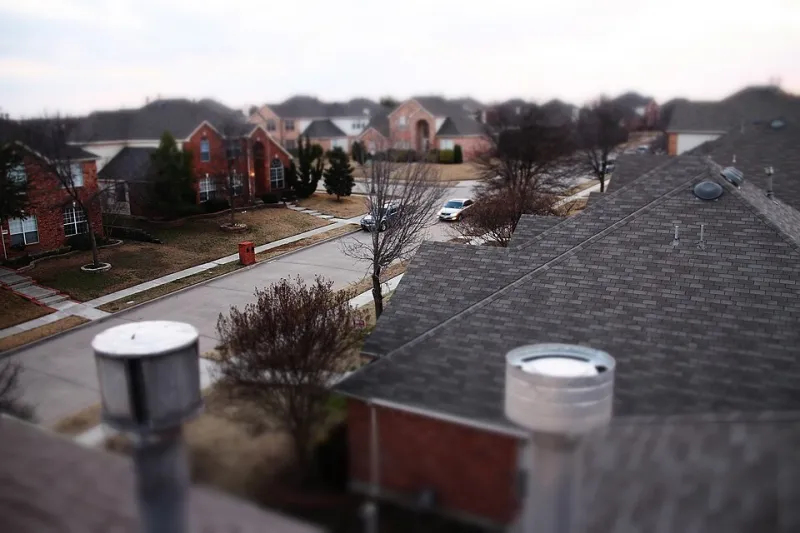
Photo: Loadmaster (David R. Tribble) This image was made by Loadmaster (David R. Tribble). Email the author: David R. Tribble Also see my personal gallery at Google Photos, CC BY-SA 3.0, via Wikimedia Commons
Let's skip the part where I tell you Comal County is wonderful. You already know that — it's why you're looking at houses here. What the glossy listings and the relocation brochures won't tell you is which neighborhoods will make you happy and which will make you want to move again in eighteen months.
I've watched a lot of people buy here, and the ones who regret it almost always skipped the same few questions. So here's the checklist. Run every neighborhood you're considering through it.
First Question: Are You in a Flood Zone?
This is the big one, and it's genuinely non-negotiable. Comal County sits in Flash Flood Alley — the stretch of Central Texas where the terrain funnels rain into creeks and rivers faster than almost anywhere in the country.
Before you fall in love with a house:
- Look up the FEMA flood map for the exact address, not the neighborhood. One street can make the difference between Zone X and Zone A.
- Ask about flood insurance even outside mapped zones. Water doesn't read maps, and several of the worst local floods hit homes nobody thought were at risk.
- Walk the property after a hard rain if you can. Does the street drain, or does the low spot in the road become a pond? Neighbors will tell you the truth; listings won't.
Homes near the Guadalupe and Comal rivers are gorgeous and occasionally very wet. If you're river-adjacent, price the flood insurance before you make an offer, not after.
The HOA Fine Print: Read It Like a Lawyer
Plenty of Comal County neighborhoods — especially the newer subdivisions west of I-35 and around Bulverde and Canyon Lake — have active HOAs, and active is doing a lot of work in that sentence.
Things people get blindsided by:
- Boat and RV rules. Canyon Lake residents, this one's for you. Some HOAs prohibit street parking of trailers entirely, which is a problem if you own a boat.
- Fence and outbuilding restrictions. That workshop you're planning? Check first.
- Short-term rental bans. Some neighborhoods have banned or restricted STRs, others haven't — and it changes both your options and your neighbors' behavior.
- Fee trajectories. Ask what the dues were five years ago. If they've doubled, ask why.
None of this makes an HOA bad. Some people love the maintained entryways and the enforced lawn standards. Just know what you're signing.
School Zones Are Real, and They're Uneven
Comal ISD is one of the fastest-growing districts in the state, which means two things: most of the schools are good, and attendance boundaries get redrawn — sometimes annually — as new schools open.
- Verify the current attendance zone directly with the district, not from a listing site. Zillow has been wrong about this.
- Ask the district office whether boundary changes are on the table for the area you're eyeing.
- If you're renting, remember your kids are entitled to attend the school for your address, but only while you live there.
Newer subdivisions often get the newest campuses, which can be a blessing (modern facilities) or a headache (growing pains, portable classrooms for a few years).
The Commute Math Nobody Does Honestly
Here's the reality: if you work in San Antonio, living in New Braunfels is roughly a 35–50 minute drive — if you time it right. Live in Canyon Lake or Bulverde and add 15–30 minutes depending on which two-lane road you're taking. Austin is a different animal entirely: 45 minutes on a good Sunday, 90+ on a weekday.
The trap people fall into: they test-drive the commute at 10 a.m. on a Saturday. Don't. Drive it at 7:30 a.m. on a Tuesday. I-35 through the New Braunfels corridor and Highway 46 between Bulverde and 281 both have rush hours that will reshape your opinion of your dream house.
Also worth knowing: local jobs in the county are real but limited. Plenty of residents commute to San Antonio, and a growing number of remote workers are the reason housing prices have climbed.
The Short-Term Rental Factor Near the Rivers
Comal County is a tubing destination, and that means neighborhoods near the Guadalupe and Comal — and around Canyon Lake — carry a mix of full-time residents and weekend rentals. That's neither good nor bad, but you should know which you're buying into.
- A street heavy with STRs can mean weekend noise, more traffic, and neighbors who change weekly.
- It can also mean your own future flexibility if you ever want to rent the place out — where permitted.
- Check unincorporated county rules versus city rules; they differ, and they change. The county has tightened STR regulations in recent years, and more changes are likely.
Ask the neighbors — the full-time ones — what the street is like in July. They'll tell you.
Water, Wells, and the Dry Summers
If you're looking outside city limits, you may be on a well and septic instead of municipal water. Comal County summers are long and dry, and drought years bring water restrictions and, in bad stretches, well stress.
- Ask the seller for well depth, yield history, and the last water test.
- Find out which water provider serves the area — some parts of the county are served by systems with drought-stage restrictions that limit outdoor watering hard by August.
- If you're on municipal water in a newer subdivision, ask about the provider's conservation rules anyway. Every summer here has a Stage 2 moment.
The Honest Bottom Line
There's no bad neighborhood in Comal County, exactly — but there are bad fits. A Canyon Lake address is a dream for a boat family and a slog for a San Antonio commuter. A downtown New Braunfels bungalow is walkable and charming and short on yard. A Bulverde subdivision is quiet and new and HOA-strict.
Drive the neighborhood at night. Talk to three neighbors. Check the flood map and the school boundary and the HOA documents before you fall in love. It's an hour of homework that saves you years of regret — and around here, that's just called doing it right.