Two Blocks From the Current: How the Comal River Raises a Kid
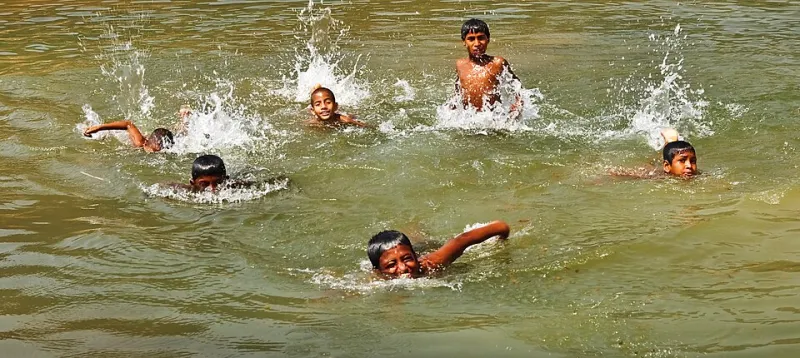
Photo: Balaram Mahalder, CC BY-SA 3.0, via Wikimedia Commons
Ask anyone in New Braunfels when their kids learned to swim, and the answer usually isn't an age. It's a place.
"Both of mine were in the water at Landa Park before they could tie their own shoes," says Marisol Vega, whose family has lived within earshot of the Comal since the 1980s. "You don't really get a choice. The river's right there, so you teach them early, and you teach them right."
That's the quiet arrangement a lot of families in this county live by. When your backyard — or your neighbor's backyard, or the park two blocks over — opens onto spring-fed water that stays 72 degrees year-round, water safety stops being an optional enrichment activity and becomes basic parenting, like sunscreen and looking both ways.
The Curriculum Starts at the Springs
Formal swim instruction in New Braunfels is practically a rite of passage, and it often begins at the municipal pools and programs that run out of Landa Park, steps from the headwaters. Parents talk about it the way folks in other towns talk about tee-ball: a season on the calendar, a carpool circuit, a milestone.
But the real classroom is the river itself. Kids here learn to read current before they can read cursive. They learn that the Comal is deceptively gentle in places and surprisingly quick in others. They learn what a low-water crossing sign means, and they learn it young.
"We had rules that probably sounded strange to my cousins in Dallas," laughs Daniel Koepp, 34, who grew up off the Guadalupe side of the county. "No swimming after rain. Never go in alone, even if you're a strong swimmer. And you always, always tell somebody where you're putting in and where you're taking out."
Those rules get passed down like heirlooms. Ask a room full of Comal County adults about river safety and you'll hear the same phrases their parents used — proof that the water shapes the culture as much as the culture shapes the water.
Field Trips With a Current
The rivers don't just shape weekends; they shape school days. Local teachers build lessons around the water in ways that would make a textbook jealous. A science unit on aquifers becomes a trip to the headwaters. Texas history gets told standing where it happened. Fourth-graders who can explain the Edwards Aquifer on a Tuesday have usually floated over a piece of it by Friday.
That early intimacy matters. A kid who grows up watching herons stalk the shallows and counting turtles off a tube rail tends to grow into an adult who notices when the water runs low or cloudy. In a county where the aquifer is a perennial dinner-table topic, that awareness starts young.
First Jobs: Whistle, Paddle, Keys to the Van
Then comes the teenage years, and with them, the classic Comal County résumé. Lifeguard certifications at 15. Shuttle driver at 16, hauling rental tubes and sunburned tourists from the exit back to the entrance, forty times a day, radio blasting. Rental shop counter shifts where you learn to explain, with a straight face, why a cooler with a latch is not the same as a cooler with a seal.
"My first job was loading tubes at the old rental outfit near the Faust Street bridge," Koepp recalls. "You learn a work ethic doing that. It's a hundred degrees, the line's out the door, and every single person asks the same three questions. You get fast, you get friendly, or you don't last."
There's something else those jobs teach, though, and locals mention it less often but mean it more: stewardship. Teens who spend summers pulling discarded cans from the shallows and reminding visitors about the river rules tend to become adults who take the health of the water personally. Several of the river cleanup volunteers and conservation-minded business owners in the county today will tell you the same thing — their environmental ethic was formed on a shift, in the sun, at seventeen.
Why They Come Back
Here's the part that surprises nobody who lives here: the kids leave, and then they come back.
College takes them to Austin, San Marcos, Lubbock, sometimes farther. But ask around the county and you'll find nurses, teachers, plumbers, and small business owners who grew up two blocks from the Comal and moved home in their twenties or thirties. The reasons they give are practical — housing costs relative to bigger cities, family nearby, a manageable commute — but underneath the practical ones is something harder to quantify.
"I tried San Antonio for six years," Vega's daughter says. She's 29 now, back in New Braunfels, and expecting her first child this spring. "I missed being able to hear the river. That sounds corny until you've lived with it. My mom watched me float by her street when I was a kid. I want my kid to have that."
Vega, for her part, already has a plan. The baby will be in the water early — maybe not before she can tie her shoes, but close.
"You don't raise kids next to a river without it becoming part of who they are," she says. "They'll leave. Most of them do. But the water has a way of calling them home."
In Comal County, that's not a saying. It's just what happens.