Lanterns, Legends, and Late Nights: Chasing Comal County's Ghost Stories After Dark
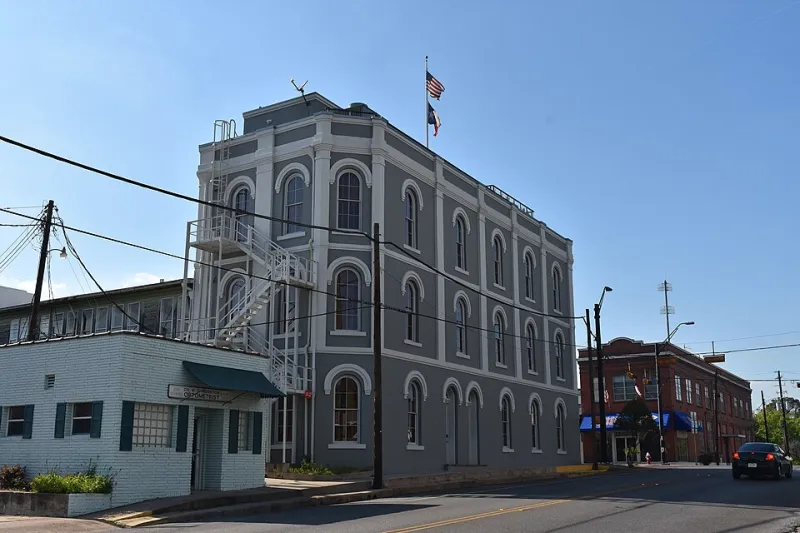
Photo: Adavyd, CC BY-SA 4.0, via Wikimedia Commons
There's a moment that happens in downtown New Braunfels after the patio lights dim and the last floaters have rinsed off the Guadalupe. The streets go quiet. The old limestone buildings seem to lean in a little closer. And that's when the stories come out.
Ask around long enough and you'll hear them: the lady in white on a second-floor balcony, the sound of boots on stairs in a building that's been locked since midnight, the lights that flicker at the old mill no matter how many electricians check the wiring. Some folks roll their eyes. Others — including a surprising number of people who've lived here for decades — will tell you they don't need convincing.
We spent a few weeks asking around, from the history room regulars to the folks who run evening walking tours, to sort the county's most enduring legends from the embellishments. What we found is a mix of documented history, family folklore, and a whole lot of good storytelling.
Why the Hill Country Tells Good Ghost Stories
There's a reason this part of Texas breeds legends. Comal County was settled in the 1840s by German immigrants who brought their own traditions with them — including a fondness for folklore that would've felt right at home in the Black Forest. Add in river floods, epidemics, frontier hardships, and buildings that have stood for a century and a half, and you've got fertile ground for stories that refuse to die.
"Every ghost story around here is really a history lesson wearing a costume," one local historian told us. "When people talk about the woman who died in the flood of '98, or the soldier who never made it home, they're keeping memory alive the only way most folks ever hear it."
That doesn't mean every tale checks out. But the best ones usually have a kernel of truth — a fire, a tragedy, a name in an old newspaper — buried somewhere in the telling.
Downtown New Braunfels: Where the Stories Cluster
Most of the county's best-known legends orbit the blocks around the old downtown core, where commercial buildings from the 1870s through the early 1900s still stand shoulder to shoulder.
The stories you'll hear most often:
- The upper-floor tenant who never left. Several older downtown buildings have second stories that sat empty for decades after businesses moved out. More than one owner will tell you about footsteps overhead, doors that won't stay shut, or a figure spotted through a transom window late at night. Historians point out that many of these floors once housed boarding rooms — meaning plenty of real people lived, and sometimes died, up there.
- The river bride. A recurring figure in local lore is a woman in a wedding dress said to have drowned near the Comal River in the early 1900s. No newspaper record of the event has ever been firmly located, which is exactly how folklore works — the story is older than anyone who tells it.
- The saloonkeeper's last round. One of the more colorful tales involves a bar owner from the frontier era who supposedly still tends his old establishment. Bar staff over the years have reported glasses moved overnight and a cold spot near the back bar. Skeptics note the building has been remodeled half a dozen times. Believers note that hasn't stopped anything.
Out at the Lake and Down the River
Head west to Canyon Lake and the mood of the stories changes. Out there, the legends are tied to water — the flooded valleys beneath the lake when it was created in the 1960s, the ranch roads that now run under dozens of feet of water, and the coves where old-timers say you can still feel the past.
A common tale among longtime lake residents involves lights seen over the water on foggy nights, said to belong to a rancher who refused to leave before the dams closed. Whether anyone actually stayed is a matter of family pride and disputed memory — several families in the area claim a connection to the story, which is its own kind of folklore.
Along the Guadalupe, outfitters and river rats have their own tradition: stories told around the fire after the last shuttle run. Most are clearly tall tales. A few, like the legend of the drowned crossing near an old low-water bridge, trace back to documented accidents from the early 20th century, when fording the river was genuinely dangerous business.
Separating Folklore from Fact
We asked the people who keep the county's records how they approach these stories. Their advice, distilled:
- Look for the paper trail. Most genuine legends have at least a newspaper clipping, a cemetery record, or a deed behind them. If a story has no anchor at all, it's probably a tale that migrated here from somewhere else — ghost stories travel light.
- Notice what changes. In a true piece of local folklore, the details stay consistent across tellers for generations. If the story changes every time you hear it, you're hearing entertainment, not legend.
- Respect the history underneath. Even the tallest tales usually point at something real — a flood, a fire, a hard winter. The stories are how communities without history books passed down what mattered.
A Self-Guided Evening Walk
If you want to do your own investigating, an after-dark stroll through downtown New Braunfels is the easiest place to start. Here's a loop locals suggest:
- Start at the Main Plaza around dusk, when the day-trippers are gone and the old buildings catch the last light.
- Walk the side streets off the plaza, paying attention to the upper stories of the commercial blocks — the second-floor windows are where most of the stories live.
- Head toward the Comal River and the older bridges, where the river-bride legend is set. The fog that rolls off the water on cool evenings does half the storytelling for you.
- Finish on a quiet residential street in the historic districts, where the oldest homes in town stand behind century-old oaks.
Bring a flashlight, a healthy sense of skepticism, and maybe a friend. Whatever you see — or don't — you'll come away knowing this county's history a little better than the average visitor.
The Real Point of the Stories
Whether or not anything haunts the old buildings downtown, something does endure there. The legends are how a county that's grown as fast as this one stays connected to the people who came before — the German settlers, the river families, the ranchers whose land now sits under the lake.
So this season, when the evenings turn cool and the plaza empties out, take the walk. Listen to the stories. And if you hear footsteps on an empty staircase downtown, well — you'll have something to tell at the next fish fry.