Your House Will Thank You: Five Repairs Worth Learning Before You Call a Pro
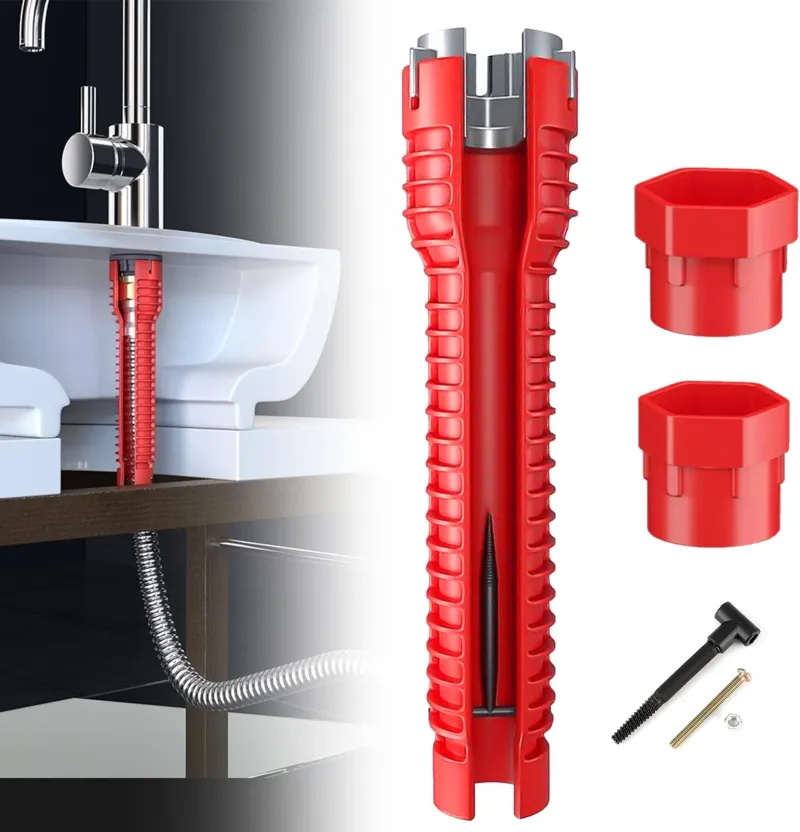
Photo: homeowner DIY home repair tools wrench fixing faucet kitchen sink, via m.media-amazon.com
Every region has its signature home repairs. In Comal County, that list is shaped by two things: the limestone aquifer under your feet and the expansive clay soil under your foundation. Newcomers from places with soft water and stable ground are often surprised in year one — then surprised again by the repair bill.
We asked around with a few local handymen and tradespeople about the jobs that fill their calendars, and more importantly, which ones homeowners could handle themselves. Here's the honest breakdown.
1. Hard Water: The Faucet Aerator You're Tired Of
If you've moved here from almost anywhere else, the white crusty buildup on your showerhead and faucets is your introduction to the Edwards and Trinity aquifers. Our water is loaded with calcium and magnesium, and it will slowly strangle your fixtures.
DIY it: Soaking aerators and showerheads in white vinegar overnight dissolves most buildup. A $10 wrench and an hour of your time handles most fixture-level issues. Doing this every six months keeps water pressure honest.
Call a pro when: Water pressure drops across the whole house, or your water heater starts making popping noises — that's sediment cake at the bottom of the tank, and flushing it wrong can turn a $150 service call into a replacement.
Typical cost: DIY for under $20; whole-house water softener installs run roughly $1,500 to $4,000 depending on the system.
2. Foundation Check-Ups After Wet Springs and Dry Summers
Hill country soil swells when it's soaked and shrinks when it's baked. That cycle is why foundation issues are the single most expensive surprise for new homeowners here.
DIY it: Monitoring. Walk your home's perimeter a couple times a year. Look for cracks wider than a quarter inch in brick or sheetrock, doors that suddenly stick, or gaps where exterior trim meets the wall. Take dated photos so you can track whether anything's changing.
Call a pro when: You see stair-step cracks in brick, or the monitoring shows movement over a season. Foundation evaluation visits are often free; actual underpinning work is a serious investment, so get multiple bids — this is the repair where fly-by-night quotes are common.
Typical cost: Evaluations usually free; real repairs range from a few thousand dollars for spot work to five figures for piering.
3. Water Heaters and the Sediment Tax
Hard water strikes again. Sediment buildup is why water heaters here tend to age faster than the national average.
DIY it: An annual flush is genuinely doable — attach a hose to the drain valve, run the tank until the water runs clear. There are good walkthroughs online, and it takes about an hour.
Call a pro when: The heater is more than ten years old, you see rust-colored water, or there's any sign of leaking at the base. Gas units especially are not a learning experience.
Typical cost: A flush service runs $100 to $200; replacement in today's market typically lands between $1,800 and $3,500 installed.
4. Sprinkler Heads and Sun-Fried Landscaping
Between triple-digit summers and watering restrictions, irrigation systems here take a beating. Broken heads and misaligned zones are the most common outdoor fix.
DIY it: Replacing a spray head is a screw-off, screw-on job at most hardware stores for $5 to $15 a head. Adjusting spray direction takes no tools at all. This is the single easiest win on the list.
Call a pro when: You suspect a line break underground — soggy patches, a water bill that jumps, or a zone that won't pressurize. Locating and repairing buried lines requires the right gear.
Typical cost: DIY heads run pocket change; professional leak hunts run $150 to $400.
5. Deck and Fence Boards That the Sun Destroyed
South-Central Texas sun is brutal on exterior wood. Boards crack, warp, and gray out long before they rot.
DIY it: Swapping individual deck boards or fence pickets is a beginner-level job — deck screws, a drill, and a trip to the lumber yard. Staining every two to three years is also very manageable and stretches the life of everything dramatically.
Call a pro when: Posts are rotting at ground level or the structure wobbles. Structural repairs to a raised deck are not where you want to learn.
Typical cost: DIY picket replacement is under $50; full restains run $2 to $4 per square foot professionally.
The Bottom Line for New Homeowners
The pattern here is consistent: routine maintenance is almost always DIY territory, and anything involving gas, structural movement, or buried lines is not. If you're relocating to Comal County, budget for the water softener conversation and put a foundation check on your annual calendar. The houses here are solid — they just ask a little more of their owners than the ones you left behind.