What the Headstones Remember: A Slow Walk Through Comal County's Pioneer Burying Grounds
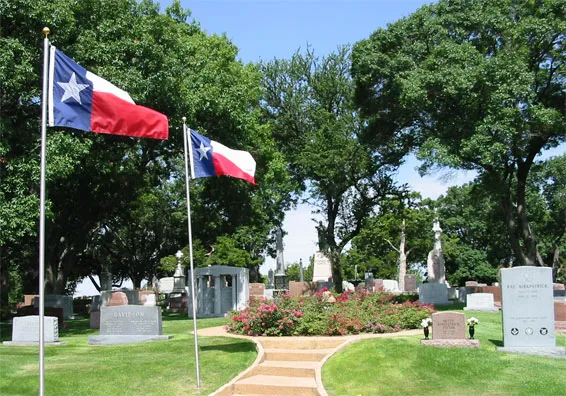
Photo: J. Williams (JW1805 on en.wikipedia), Public domain, via Wikimedia Commons
A cemetery in November is a different kind of place. The light comes in low and sideways, the grass has gone thin, and the stones stand out like teeth. If you walk into one of Comal County's older burial grounds on a cold morning with an hour to spare, you'll find that the ground has a lot to say, and not much of it is sentimental.
Start Where the Town Started
The oldest burials in the county sit close to where the first settlers put their houses — near the rivers, near the churches, near the roads that already existed. New Braunfels' Comal Cemetery holds some of the earliest; the churchyards around the old German congregations hold others. Out on the county's back roads, you'll find small family plots with four or five stones and a chain-link fence, sitting in what is now somebody's pasture.
What's striking isn't the age. It's the clustering. Walk a row and you'll see the same family name four times in a decade, then nothing for twenty years.
The Dates Are the Story
Look at the numbers on the stones and a pattern appears fast. Many of the earliest markers belong to people who arrived in the 1840s and died within a few years of getting here. Others carry dates from the late 1800s in tight clusters — three children in one family in a single month, then a mother a week later.
Those clusters aren't a coincidence. Cholera, typhoid, diphtheria, and the ordinary childhood illnesses that are now a pediatric appointment were lethal in a settlement with no clean water system and no hospital. A stone with an 1870s death date for a two-year-old and a four-year-old sitting side by side is not unusual. It's a record of a bad week.
Dates also tell you who arrived when. A birth year in the 1820s paired with a death year in the 1890s, with a German place name carved beneath it, is the grave of someone who crossed an ocean in middle age and spent their last decades in a town they helped build.
The Symbols, Decoded
Cemetery iconography is a language, and in Comal County it's spoken in both German and English.
- The weeping willow — grief, and a life cut down. Extremely common on stones from the mid-to-late 1800s.
- Clasped hands — a farewell, or a marriage. Which one depends on whether the sleeves look male or female.
- A lamb — a child's grave. Usually under age twelve.
- A finger pointing up — the soul going to heaven. Blunt, and effective.
- A draped urn — mourning, and also a bit of a fashion statement; it shows up heavily in the Victorian era.
- A tree stump — the mark of the Woodmen of the World, a fraternal benefit society that once supplied markers to members. These are often carved wood replicas cast in stone.
There's also the “white bronze” marker — a zinc monument that looks like pale gray stone and is often mistaken for marble. These were mail-ordered from a catalog in the late 1800s and early 1900s, assembled from panels, and they have a distinctive hollow sound when you tap them (which you should not do).
And then there's the German. Inscriptions like Hier ruht in Gott — here rests in God — or a verse from Luther's Bible are common on the older stones. Some are carved so precisely that the letters look stamped. Others lean toward the folk-art end of the spectrum, with spelling that suggests the stonecutter was working from memory.
What the Trades Tell You
A grave marker is a receipt. It tells you what a family could afford and what a community thought mattered.
Blacksmiths, wagon makers, millers, and saddlers show up in the inscriptions and in the small carvings on older stones — a hammer, an anvil, a wheel. Later stones list a trade less often than a lodge affiliation, which tells you something about how quickly fraternal organizations replaced guild identity as the way a man was described.
You'll also see the occasional blank space — a stone with a name and a birth date and nothing else, waiting for a death date that was never carved. Sometimes that means the family moved. Sometimes it means nobody was left to pay for it.
The Feuds Are Still Visible
Family plots have a geometry to them. A husband and wife, side by side, with a small stone between them. Or a first wife buried on one side and a second on the other, in an arrangement that leaves no ambiguity about the timeline.
More interesting are the gaps — the plots where the family buried everyone except one person, who is buried across the cemetery, or in another town entirely. It's rarely a scandal. Usually it's a second marriage, a move, or a church disagreement. But it's a reminder that these quiet grounds are the residue of a place where people argued about everything.
The People Doing the Work
The stones don't clean themselves. Across the county, volunteers — historical societies, church groups, and individuals with a soft spot for a particular plot — spend weekends straightening leaning markers, clearing brush, and photographing inscriptions before the letters weather away.
The work is unglamorous and specific. D/2 biological solution and soft brushes, not bleach and a pressure washer, which will strip the surface right off a limestone marker. Documentation matters just as much: photographing every stone, transcribing every name, and uploading it so that a family in another state can find a great-great-grandparent without making the trip.
It's slow going, and the funding is whatever people can raise. But the alternative — a county where the oldest record of its own founding is a pasture with a fallen fence — is worse.
If You Go
Walk slowly. Bring a camera and don't touch the stones more than you have to. Read the names out loud; it sounds strange until you do it. And if you see a marker that's sinking or a plot that's been taken over by brush, write down the location and call the cemetery association or the county historical commission. They know who to call. They usually just need someone to tell them where.