Chasing the Bloom: A Local's Roadmap to Comal County's Wildflower Season
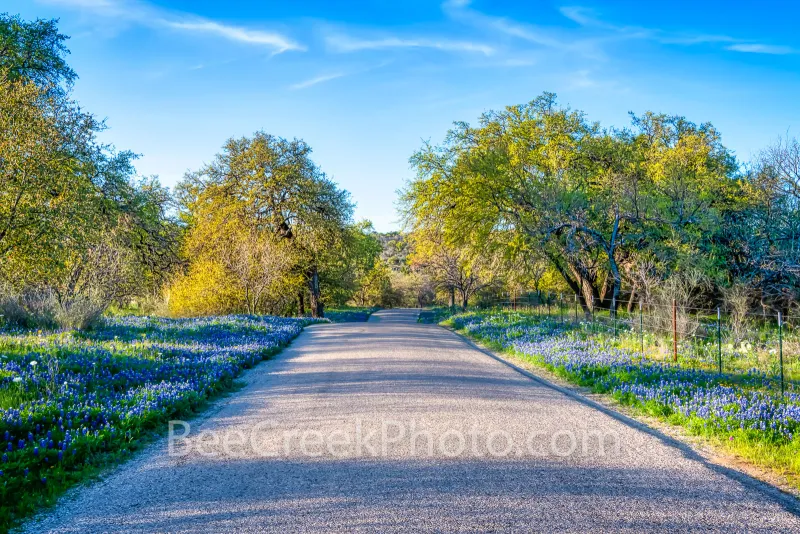
Photo: Texas bluebonnets along rural roadside hill country spring, via www.beecreekphoto.com
Every March, something funny happens to traffic patterns around Comal County. Cars that normally blow down RM 46 at highway speed start slowing to a crawl. Doors pop open at odd pull-offs. And everywhere you look, somebody's kid is sitting in a patch of blue so dense it looks Photoshopped.
Welcome to wildflower season. It lasts maybe six weeks, it doesn't wait for anybody, and if you know where to look, it's one of the best free shows in Texas.
When to Go: A Rough Bloom Calendar
Wildflowers don't check a calendar, but they're remarkably consistent around here, give or take a week depending on rain.
Mid-March: The early risers show up first. Indian paintbrush starts dotting roadsides in red and orange, usually along south-facing slopes where the sun hits hardest. Bluebonnets are still mostly buds.
Late March through the first week of April: This is it. Peak bluebonnet season. The stretch of RM 306 between Canyon Lake and points west starts producing those postcard drifts, and the FM 2673 corridor toward Sattler gets genuinely spectacular.
Mid-April: Bluebonnets start fading at the bottom of the stalks, but second-wave bloomers take over — pink evening primrose, firewheels (gaillardia), and the first of the winecups.
Late April into May: If we've had good spring rain, the show shifts to the country roads. Look for horsemint, thistle, and the last stubborn paintbrush hanging on into warmer days.
The Roads Worth Driving
Everyone knows the highways, but the real magic is one turn off the beaten path.
RM 306 west of Canyon Lake is the classic. Wide shoulders in spots, rolling hills, and long sightlines that make for great drive-by wildflower viewing. Use the actual pull-offs — there are several — rather than testing your luck on the shoulder.
FM 2673 between Sattler and Startzville delivers a reliable mix of bluebonnets and paintbrush with Canyon Lake glimpses as a bonus.
The lesser-known picks: The network of county roads off FM 306 and around Fischer and the Devil's Backbone area is where locals go when the highways get crowded. Farm-to-market roads like portions of RM 32 offer dramatic Hill Country backdrops — wildflowers with a view. Just remember these are working roads with blind curves and no shoulder, so drive them slowly and park only where it's genuinely safe and legal.
The Photo Rules Nobody Reads But Everybody Should
We'll say it plainly: do not trample the flowers for a picture. Bluebonnets are tough, but the ground around them isn't, and a rutted patch of mud takes a season to recover.
A few pointers from years of watching this play out:
- Never cross a fence line. That gorgeous field? Almost certainly private property. Texas law doesn't smile on trespassing, and ranchers around here are well within their rights to make it an expensive mistake.
- Watch for traffic before you crouch. Every spring, first responders pull someone out of a roadside ditch who was framing the perfect shot. No photo is worth it.
- Skip the snake check at your own peril. Rattlesnakes and fire ants love wildflower patches as much as photographers do. Look before you sit.
- Golden hour is real. The hour after sunrise and before sunset turns a decent bluebonnet shot into a stunner. The low light makes the blues deeper and gives you that warm backlight on the grass stems.
- Get low. The difference between a snapshot and a keeper is usually shooting from ground level with the flowers filling the foreground.
Why the Roadsides Look So Good (It's Not an Accident)
Here's something most newcomers don't realize: those dazzling highway medians are partly by design. TxDOT's wildflower program deliberately delays mowing along many state highways until after bloom season, and the department has been scattering wildflower seed along Texas roadsides since the 1930s — a legacy that started with efforts to beautify the state's highways and never really stopped.
Local ranchers play a role too. Many deliberately defer mowing and grazing on certain pastures through spring, both for the bees and because a stand of bluebonnets is about as good a advertisement for Hill Country land as money can buy. That's why some of the best displays you'll see are behind a barbed-wire fence with a gate — admire them from the road, and maybe wave if the owner's out.
Take the Kids, Leave the Flowers
One last thing. That old rumor that picking bluebonnets is illegal? It's mostly myth — there's no state law against it. But there are rules against damaging plants in state parks, and cutting flowers along highways can get you a talking-to. More to the point: a patch picked today is a patch nobody else gets to see tomorrow.
Snap the photo. Breathe in the season. And leave the blue right where you found it — because next March, a whole new batch of neighbors is going to want their turn.
See you out on 306. Slow down and wave.