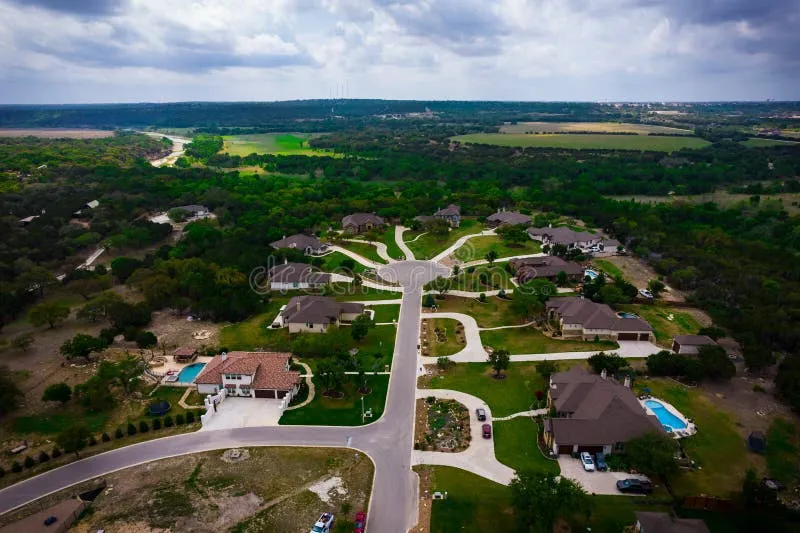
The Laptop Came First: How Remote Work Is Quietly Redrawing the Map of Comal County

Photo: DominikaMiazek, CC BY-SA 4.0, via Wikimedia Commons
There's a moment that seems to happen to everyone who moves here to work remotely. It usually comes about three weeks in, somewhere between the second coffee and the first Slack message of the day, when they look up from the laptop and realize the view out the window isn't a parking garage. It's a deer. Or the lake. Or a pasture in Bulverde that's currently doing nothing more dramatic than being a pasture.
For a growing number of professionals, that moment is the whole point. Comal County has become a landing spot for remote workers priced out of Austin, burned out on Houston commutes, or simply done pretending that a cubicle in San Antonio is the only place a spreadsheet can be opened.
But moving your career to the Hill Country isn't just a change of address. It's a change of infrastructure, rhythm, and — if you ask the people who've done it — expectations. Here's what the transition actually looks like.
The Internet Question, Answered Honestly
Let's start with the thing every remote worker asks first: can you actually get a stable connection out here?
The honest answer is a very Texas "it depends on your road." In New Braunfels proper, fiber and cable options are widely available, and plenty of home offices run video calls all day without a hiccup. In the more rural stretches — think the far reaches of Canyon Lake, or properties scattered along the county's western edges — the picture gets patchier. Satellite internet has improved dramatically in the last few years, but latency is still latency, and anyone who's frozen mid-sentence on a client call knows the difference.
The local wisdom, repeated by nearly every transplant we talked to: check the address, not the ZIP code. Availability can change from one mailbox to the next. Smart movers verify service before they sign anything, and many keep a cellular hotspot as a backup plan, which in this part of the world is less paranoia and more basic planning.
Where the Work Actually Happens
Not everyone thrives in a home office, even one with a lake view. The isolation catches some newcomers off guard — the same people who spent years complaining about open-floor plans discover they miss having humans nearby.
New Braunfels has stepped up with options. The downtown area and its surroundings now offer coworking spaces where freelancers, consultants, and corporate remote workers share tables, printers, and the universal coworking ritual of complaining about video calls. Coffee shops along and near the downtown corridors double as informal offices, though the unwritten rule applies: buy more than one coffee if you're camping for four hours.
Then there's the hybrid crowd — people who drive into Austin or San Antonio once or twice a week and work from Comal County the rest of the time. For them, the county functions as a base camp: big-city pay, small-town evenings. It's the arrangement that seems to convert the most skeptics.
The Time Zone Math Nobody Warns You About
Here's a quirk of the remote life that surprises people: Texas is on Central Time, but plenty of remote workers now report to teams on the coasts. That means East Coast companies pulling 7 a.m. standups, or West Coast clients whose "end of day" stretches to 8 p.m. Central.
Locals have adapted in their own ways. Some front-load their workdays and sign off by late afternoon, trading the sunset on the porch for an early start. Others structure their days around the county's natural rhythms — work hard through the summer heat, take the kayak out at 4 p.m., finish the deck work after dinner. The flexibility is the perk; the discipline is the price.
What the Trade Actually Costs
Let's be direct about the economics, because that's what this migration runs on. A salary calibrated for Austin or Houston goes remarkably far here. Housing costs run meaningfully below the big metros, property taxes are a known Texas consideration worth budgeting for, and the day-to-day — groceries, services, a night out — generally stretches further than it does in the cities.
But the trade has real costs, too. Some newcomers miss the restaurant depth of a major metro. Others find that the nearest specialized services, from certain medical care to niche professional networks, require a drive. And the social adjustment is real: building a community in a place where your coworkers are in three time zones takes intention. The people who thrive here tend to be the ones who show up — the farmers market, the youth leagues, the chamber events, the volunteer fire department fundraisers.
Is the Desk With a View Worth It?
Ask a dozen remote workers in Comal County whether the move was worth it and you'll get a dozen versions of the same answer, usually delivered while gesturing at the window.
The ones who struggle tend to be the ones who moved here expecting the county to entertain them. The ones who stay are the ones who arrived looking for a life that includes work, rather than a work arrangement that occasionally allows a life. They've learned the local rhythms — that Friday nights in the fall belong to the high school stadiums, that summer mornings on the river are sacred, that a neighbor with a tractor is worth more than a second monitor.
The big-city salary, it turns out, was never the point. It's just what made the view affordable.